Appearance Pointers
MultiModal Region Control of Diffusion Transformers · Under review
Appearance Pointers: MultiModal Region Control of Diffusion Transformers
Capabilities
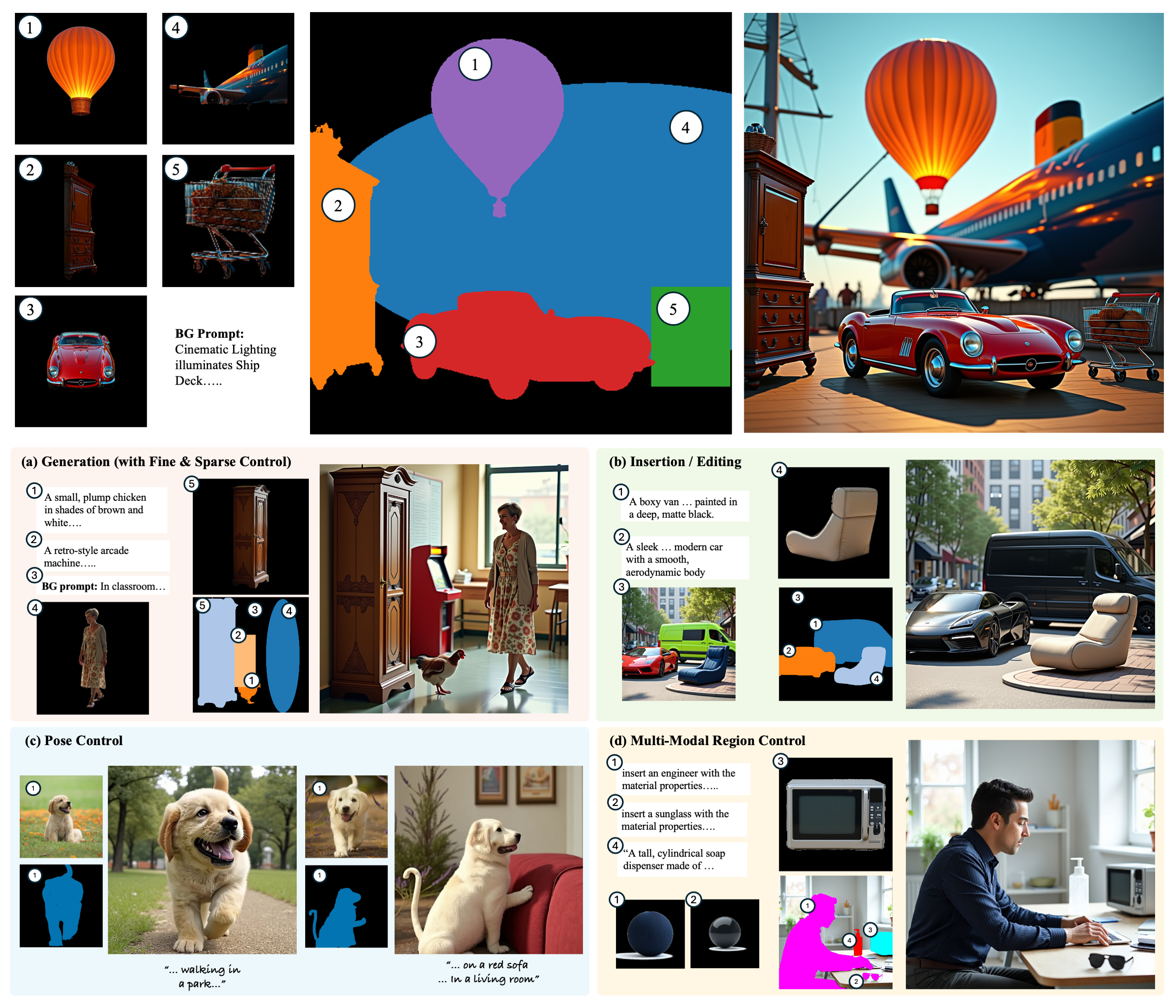
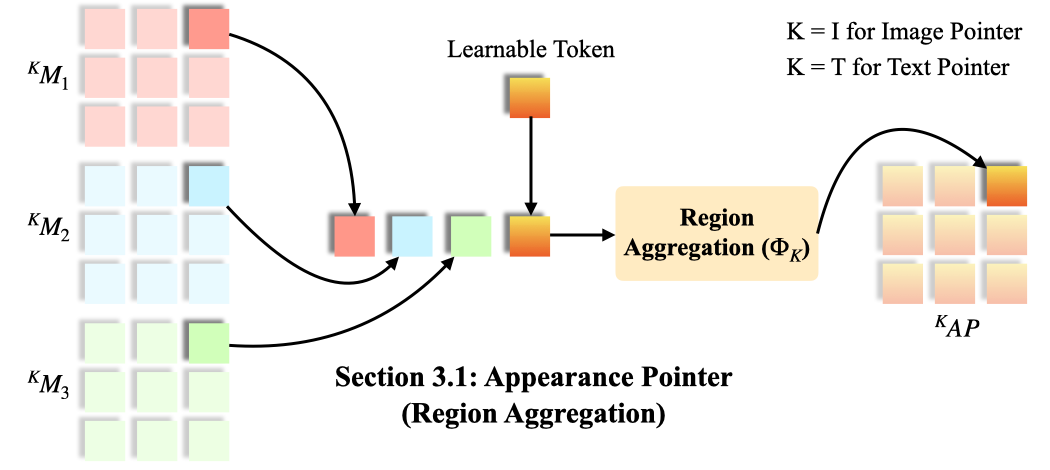
Methodology
Appearance Pointers performs region-conditioned image generation and editing by injecting regional tokens into a pre-trained FLUX Kontext generation model. Special tokens denoted ⁱAP and ᵀAP tie each region to its conditions, enabling multi-modal region-level control inside a single forward pass.
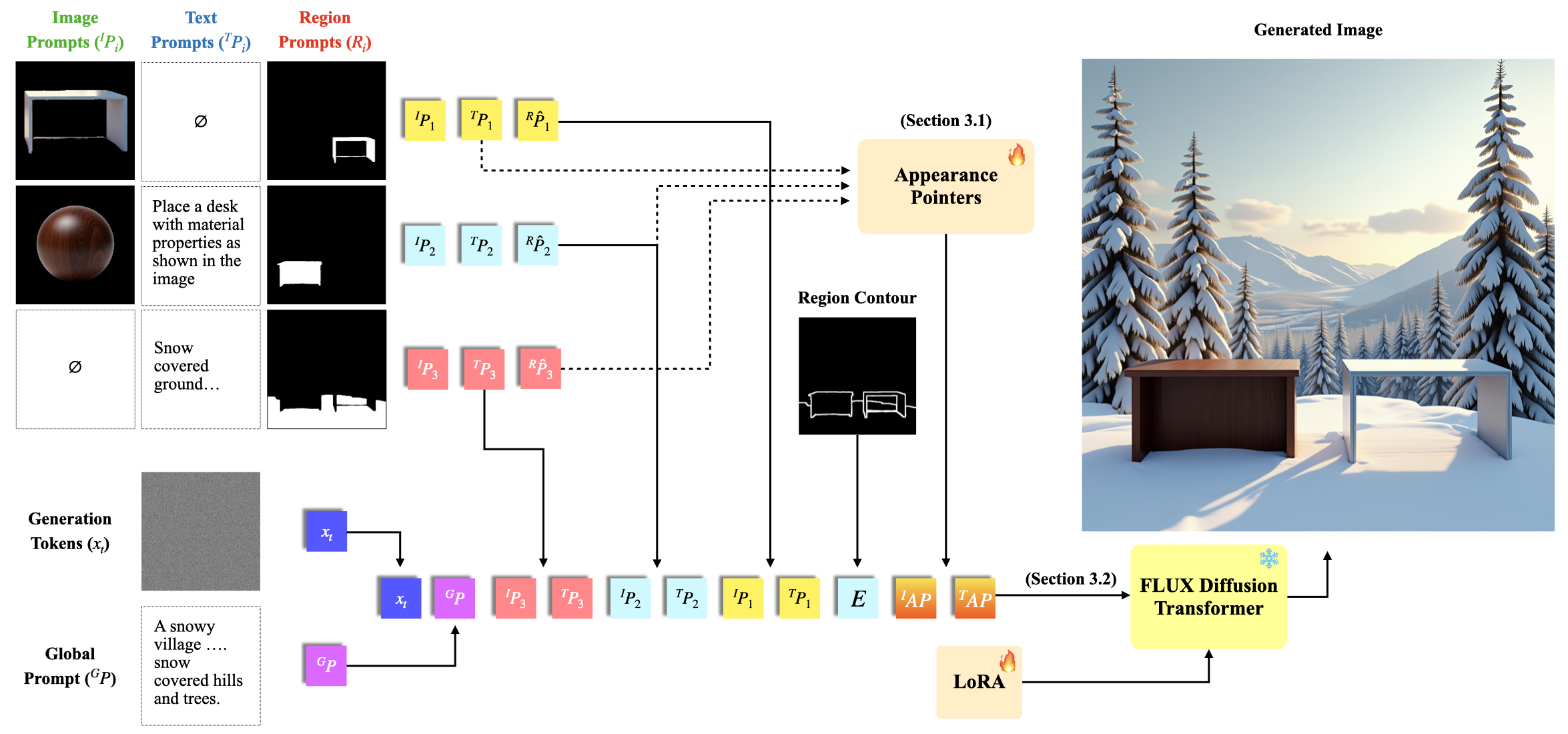
Region Linking
Each region is processed independently. Its text prompt, reference image, and mask signals are fused to produce region tokens ⁱMᵢ (image stream) and ᵀMᵢ (text stream), which feed the FLUX transformer per region i.
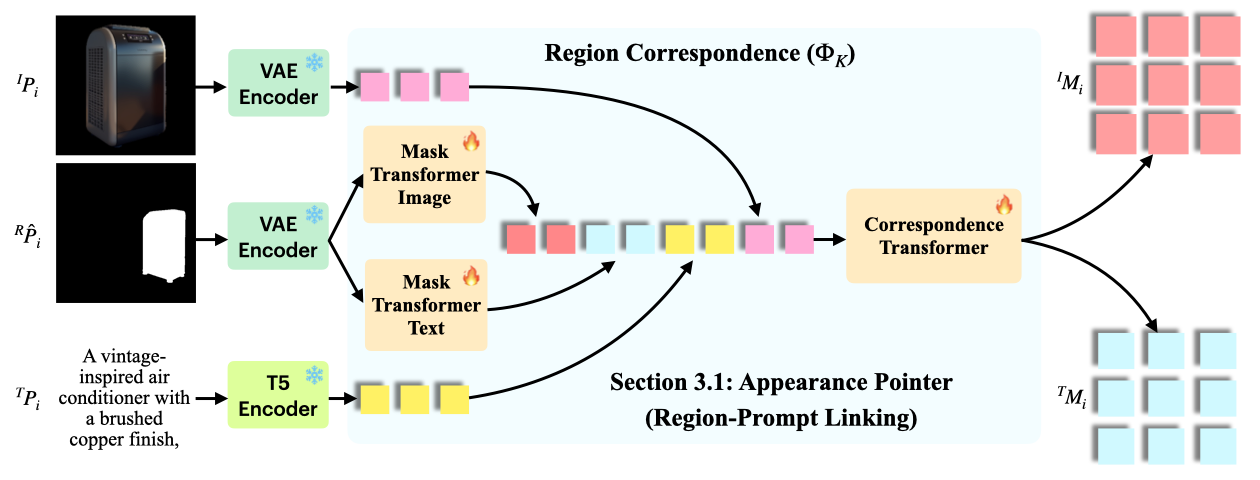
Region Aggregation
Region tokens from the image and text streams across all regions are combined into a single, unified per-region representation. Aggregation happens independently at every spatial patch, which preserves the spatial cues carried by each Appearance Pointer token.
Attention Map for Appearance Pointers
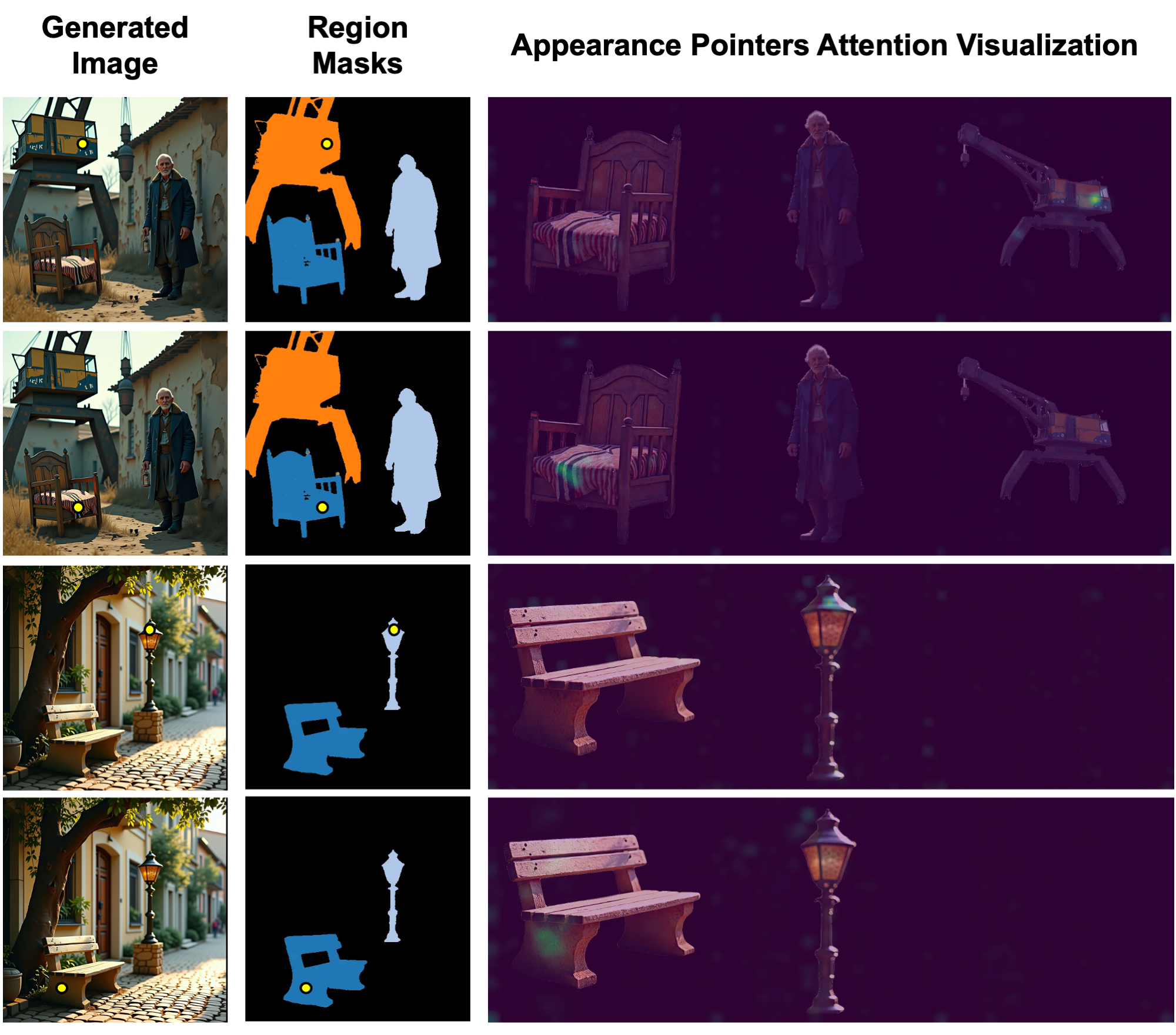
After training, the Appearance Pointer learns to attend to its corresponding region condition. Queries come from the Appearance Pointer token; keys come from the Image Condition tokens. The heatmap below visualizes the attended region at a highlighted query location.
Qualitative Results — In the Wild
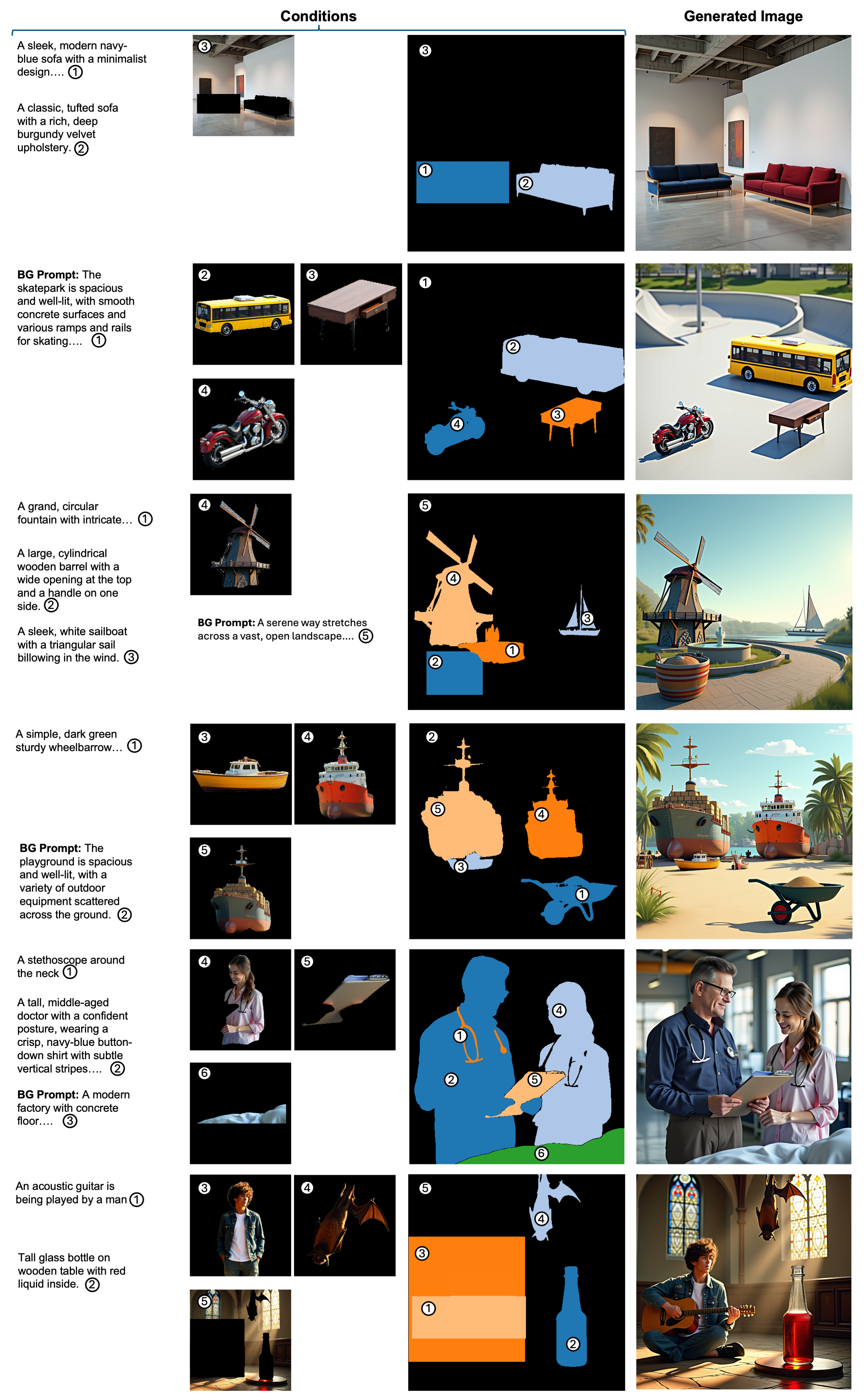
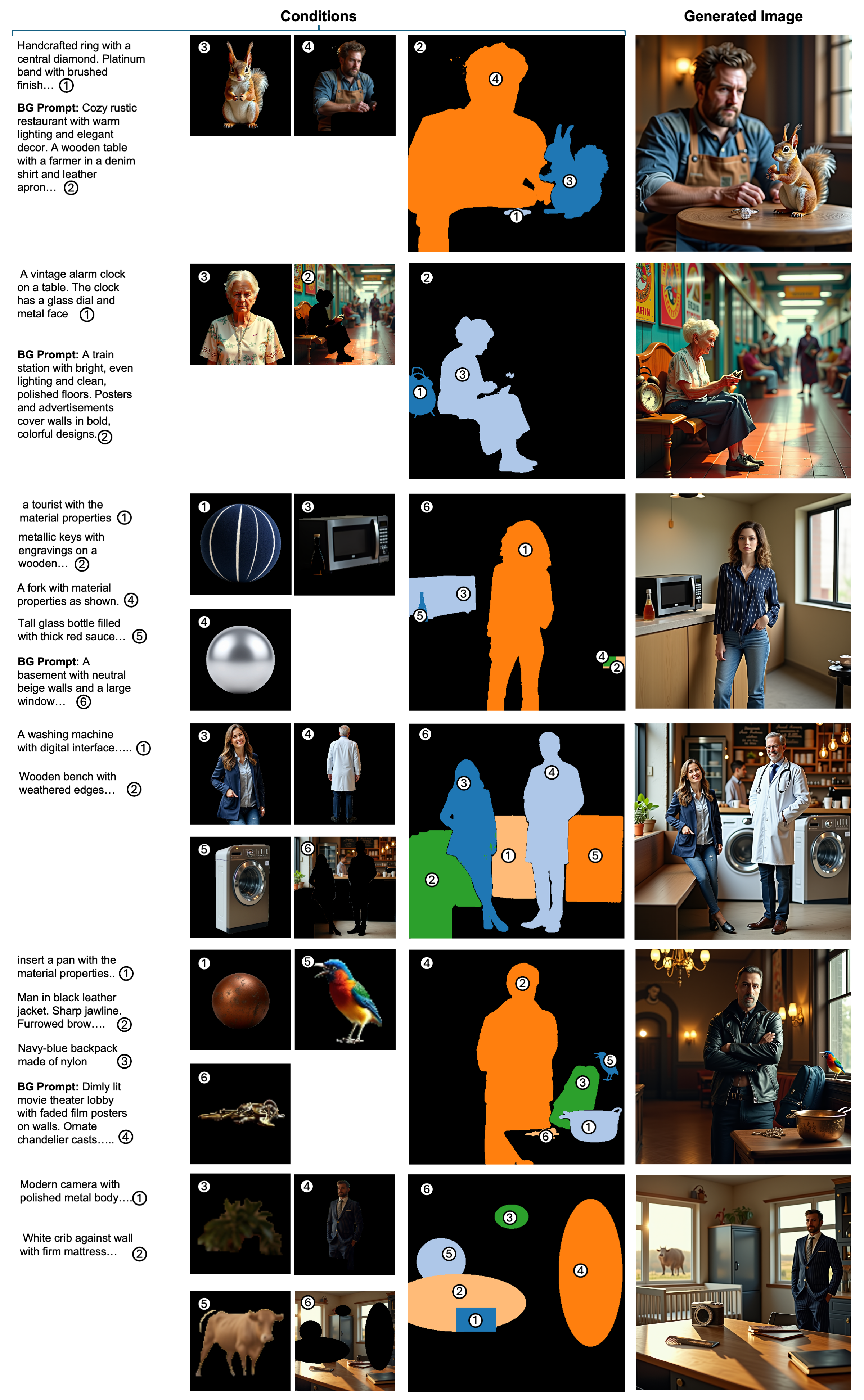
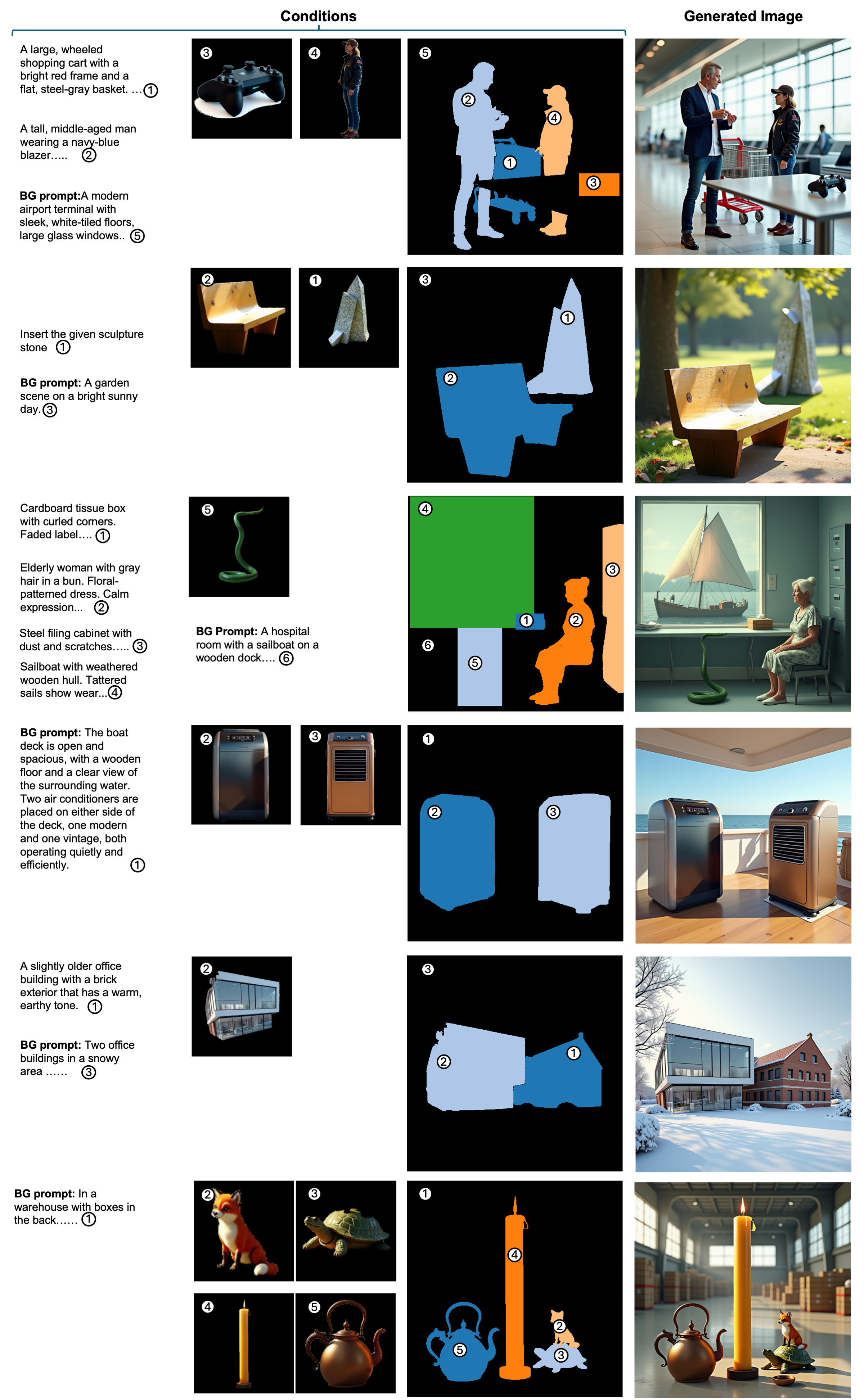
We showcase heterogeneous region-condition combinations: each region of a target image is independently driven by text, a reference image, or a material texture. Numbered regions tie back to their corresponding condition.
Dataset
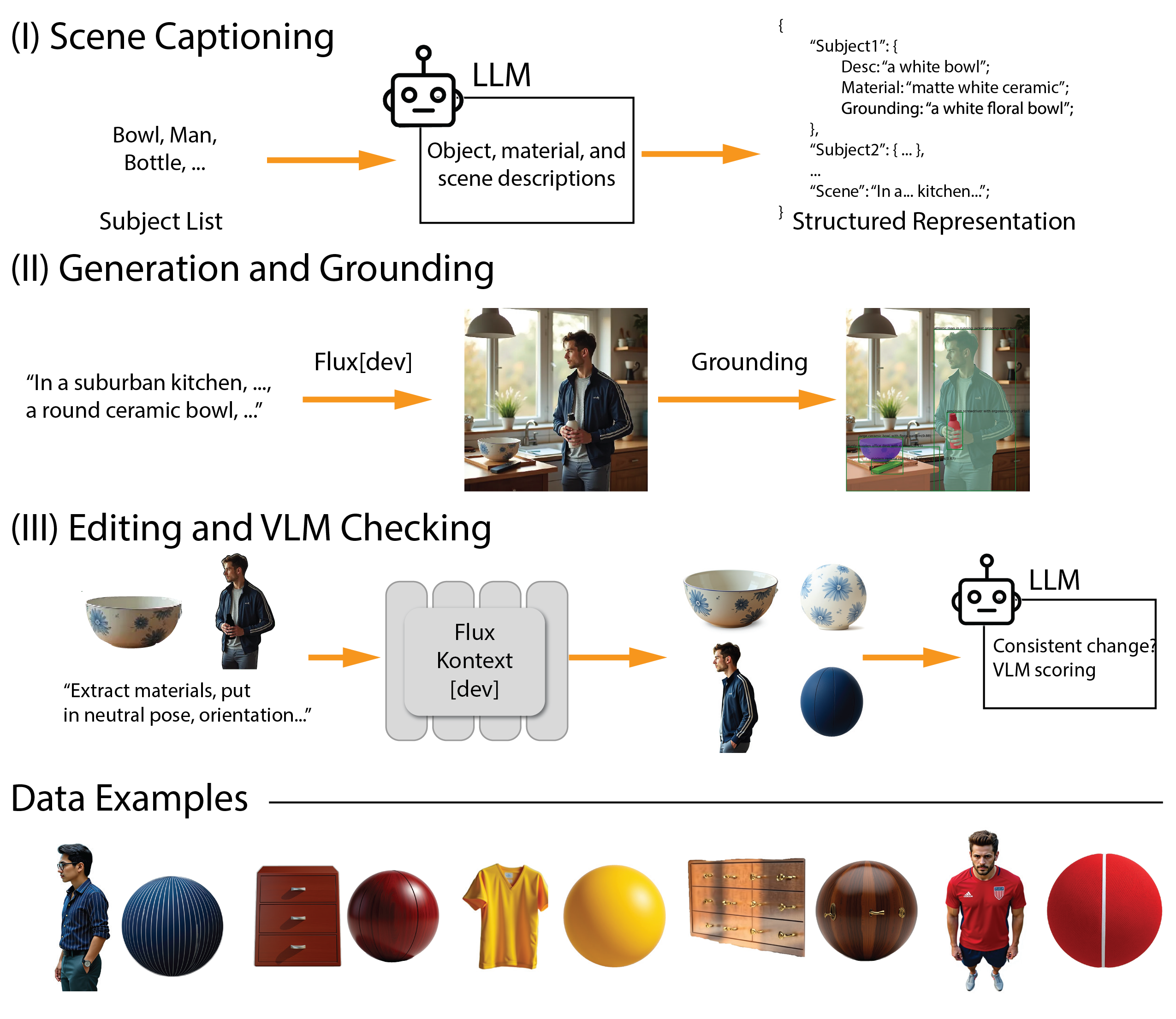
We release a region-control dataset containing, for each image:
- Region segments
- Region captions
- Region pose-variation edits
- Region texture on a sphere
- Pose and texture consistency scores
Citation
Acknowledgements & Contact
Part of this work was done during Rahul's internship at Adobe Research.
Questions? Reach out at rahul_sajnani@brown.edu.